Sentence first—verdict afterwards
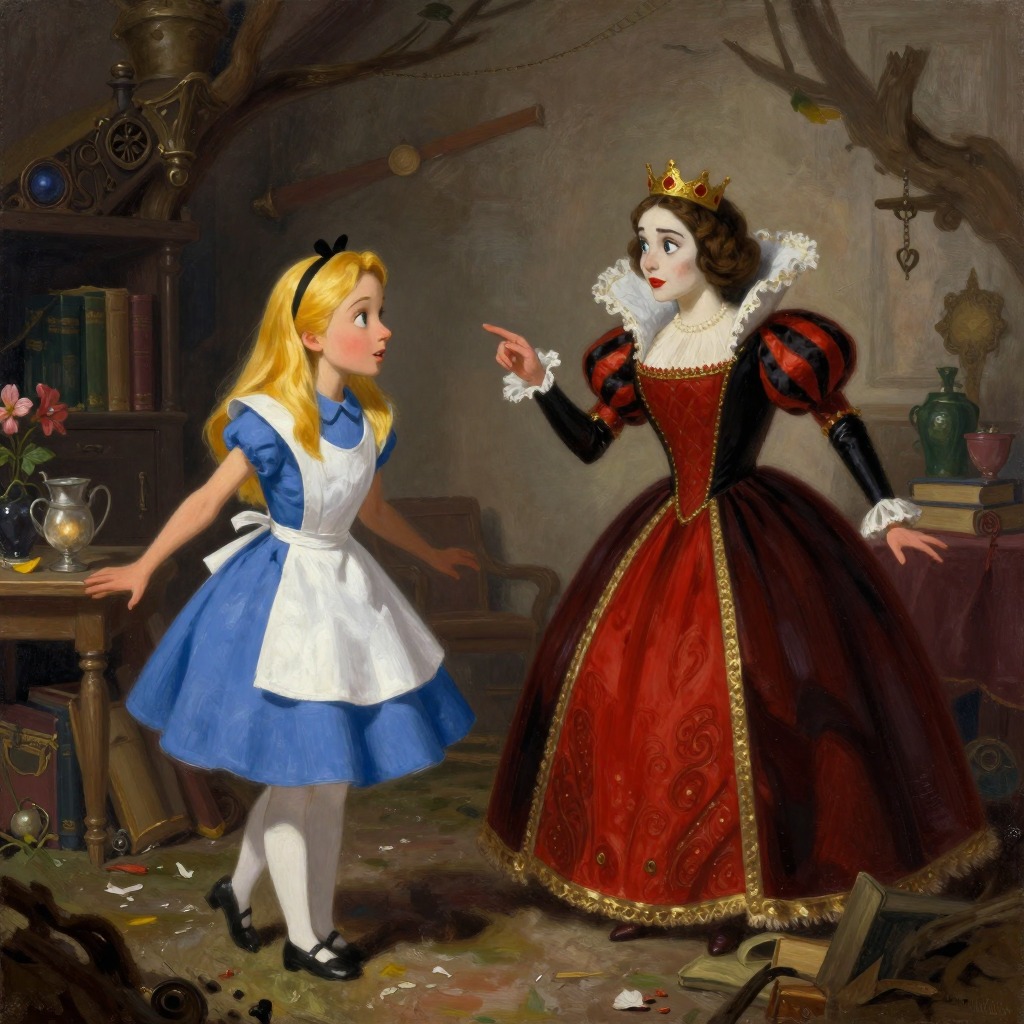
The rule "Sentence first—verdict afterwards" is the Queen of Hearts' most extreme departure from ordinary justice, a procedural inversion that replaces due process with instant, irreversible punishment. It crystallizes the Queen's method of governance throughout Wonderland: she habitually orders beheadings without trial, shouting "Off with his head!" or "Off with her head!" about once a minute during the croquet game, and sentences three players to execution merely for missing their turns. By the end of half an hour of play, all players except the King, the Queen, and Alice are in custody and under sentence of execution. The Queen's authority rests entirely on the terror of this summary decree, not on any legal or moral foundation.
Origin and Context in the Trial
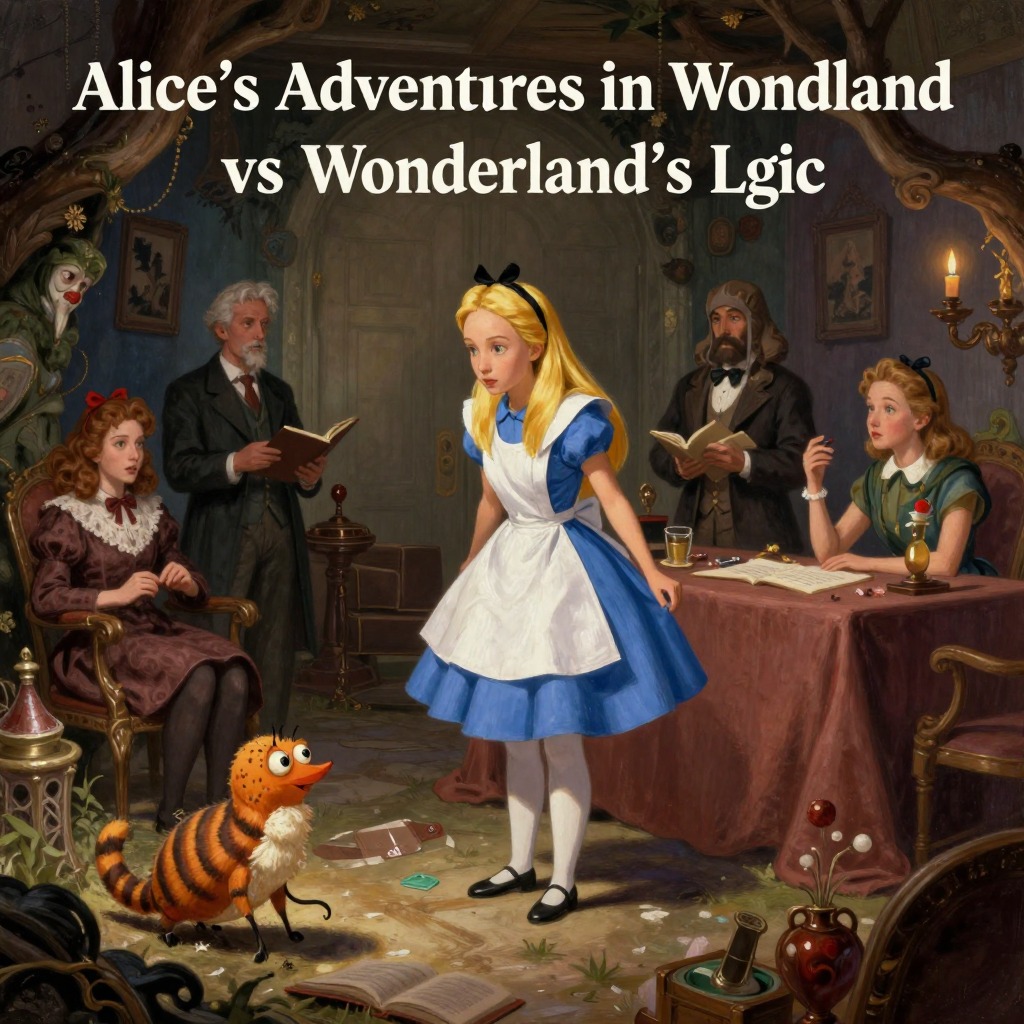
The rule is formally invoked during the trial of the Knave of Hearts, after the King has repeatedly urged the jury to "consider your verdict"—for about the twentieth time that day. The Queen interrupts with a categorical rejection of standard procedure: "No, no!" she says. "Sentence first—verdict afterwards." This is not a new idea for her; it is the logical extension of her earlier behavior. When the King tries to apply Rule Forty-two ("All persons more than a mile high to leave the court") to Alice, the Queen immediately escalates, adding "Nearly two miles high" to justify expulsion. Her instinct is always to bypass deliberation and move straight to punishment.
Alice's Defiance and the Collapse of the Court
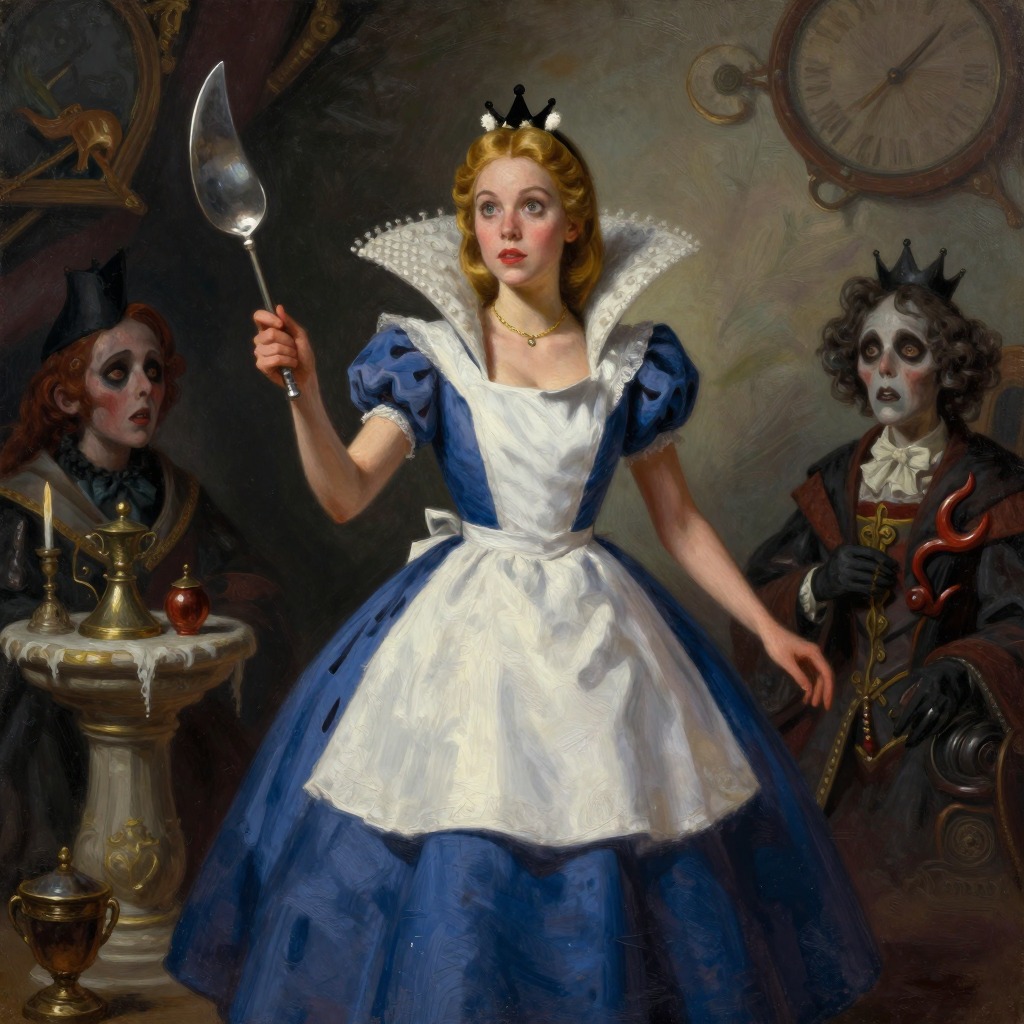
Alice responds to the Queen's proclamation with immediate, loud defiance: "Stuff and nonsense!" she says. "The idea of having the sentence first!" When the Queen, turning purple, commands her to "Hold your tongue!" Alice refuses with a flat "I won't!" The Queen then shouts at the top of her voice, "Off with her head!"—but for the first time, nobody moves. Alice, who has grown to her full size, declares, "Who cares for you? You're nothing but a pack of cards!" At this, the entire pack rises into the air and flies down upon her. Alice gives a little scream, half of fright and half of anger, and tries to beat them off—only to find herself lying on the bank with her head in her sister's lap, waking from her dream. The rule "Sentence first—verdict afterwards" thus becomes the final, unsustainable provocation that breaks the dream's logic and returns Alice to the ordinary world.
Thematic Significance
The rule embodies the Queen's conception of power as pure, instantaneous will, unmediated by reason, evidence, or mercy. It is the opposite of every principle Alice has learned about fairness: the trial itself has already been a parody of justice, with the jury writing down "stupid things!" on their slates, the King inventing rules on the spot, and the evidence consisting of a nonsensical set of verses. The Queen's demand to sentence first and try afterward is the logical endpoint of a system where authority is exercised solely through the threat of beheading. Alice's refusal to accept this—her insistence that the court's procedures are meaningless and its rulers are merely cards—is the moment when her accumulated growth in size and confidence finally matches her moral certainty. The rule is not just a procedural absurdity; it is the key that unlocks the dream's end, because it forces Alice to recognize that Wonderland's power structures have no real substance beyond the fear they inspire.